 Image 1 of 4
 Image 2 of 4
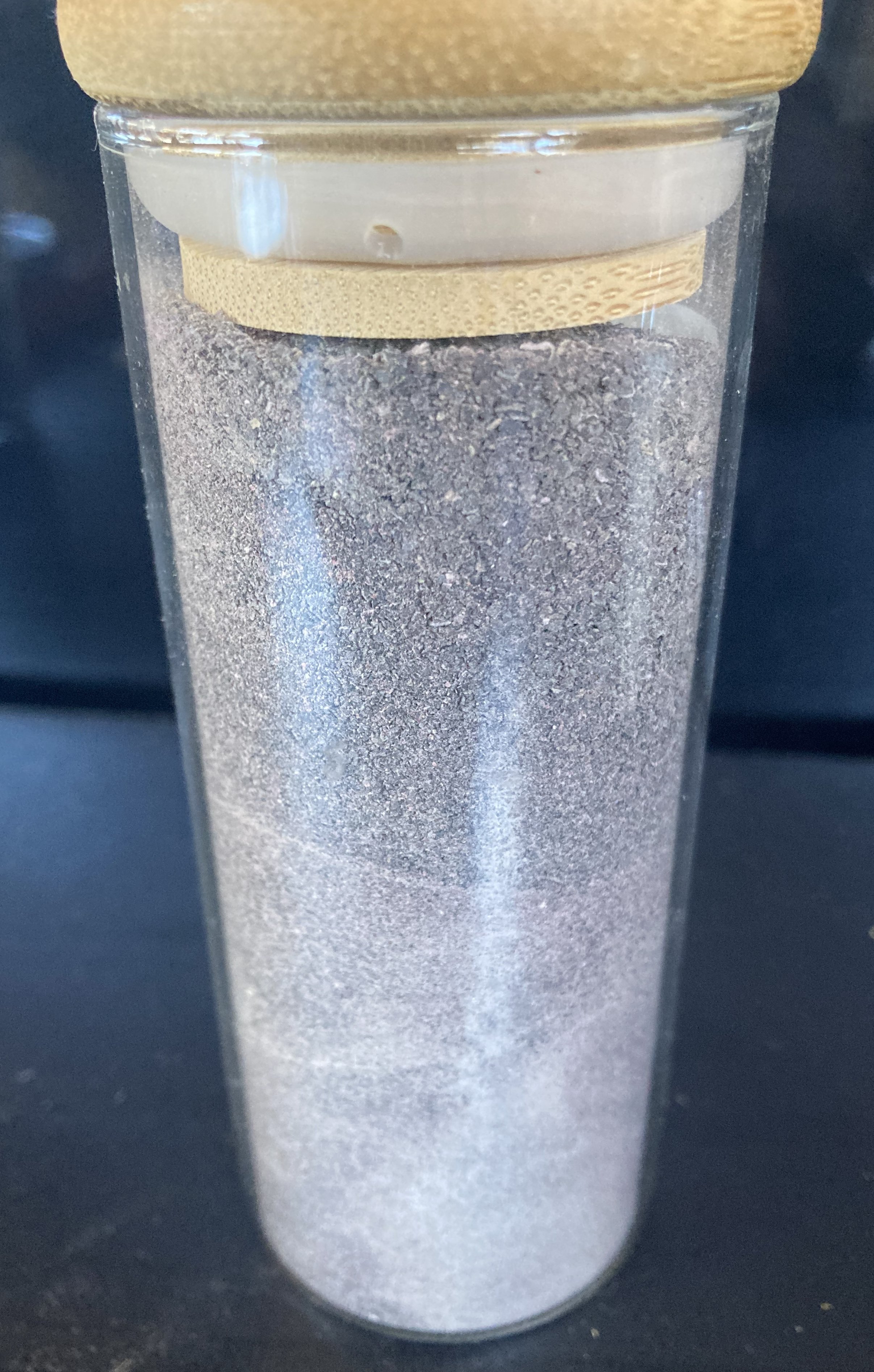 Image 3 of 4
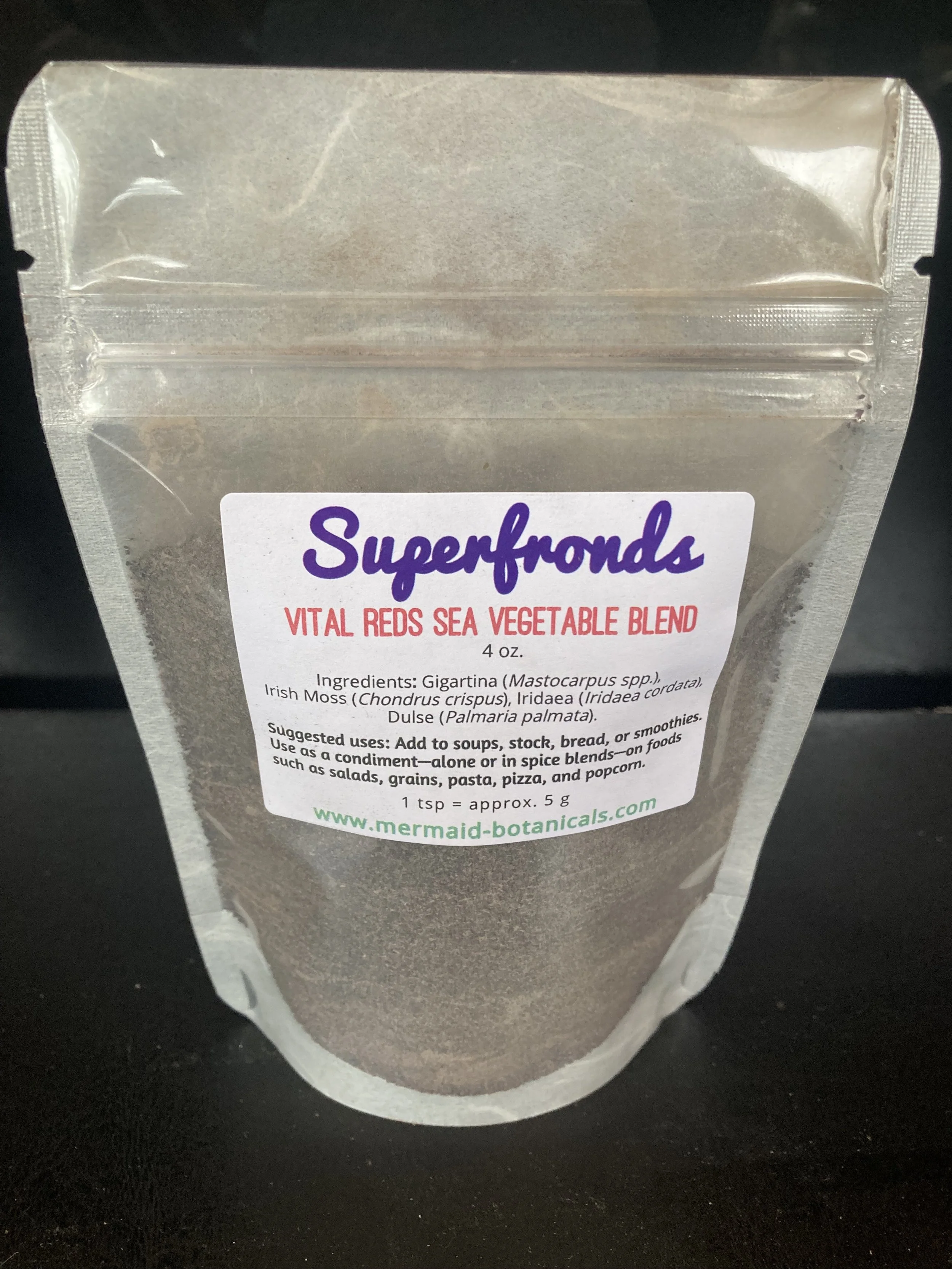 Image 4 of 4
Ingredients: Gigartina (Mastocarpus spp.), Iridaea (Iridaea cordata), Irish Moss (Chondrus crispus), Dulse (Palmaria palmata)
Superfronds Vital Reds Sea Vegetable Blend is a blend that combines all the best that various red seaweeds have to offer. Carrageenan is a sulfated polysaccharide, which has been studied for its substantial antiviral activity (ability to prevent viral cell attachment), immunomodulatory activity, and antioxidant capacity, among many other properties. Because red seaweeds often have a highly variable carrageenan content—both in terms of quantity and carrageenan type—this blend offers a range of carrageenans (with varied bioactivity) in hopes of highlighting and enhancing the carrageenan complex for optimal support.
Red seaweeds containing carrageenan have also been traditionally used as lung tonics and to treat lung ailments by many cultures throughout the world. These seaweeds contain many other bioactive compounds, including other medicinal polysaccharides, a diverse array of antioxidant pigments, and other antioxidant constituents, as well as diverse vitamin and mineral profiles and generally mid-range iodine content. Red seaweeds have some of the highest manganese content among seaweeds.
Superfronds Vital Reds Sea Vegetable Blend features a mix of some of our best red seaweeds Gigartina (Mastocarpus spp.), Iridaea (Iridaea cordata), Irish Moss (Chondrus crispus), and Dulse (Palmaria palmata). These seaweeds contain small amounts of a range of nutrients: iodine, calcium, magnesium, iron, potassium, vitamin A, vitamin C, and B complex, as well as Essential Fatty Acid content, and trace nutrients zinc, copper, manganese, selenium, and chromium. Each contains several antioxidant constituents, including antioxidant pigments phycocyanin and phycoerythrin, and its own unique carrageenan profile, as noted below.
Generally containing a moderate amount of vitamins A, C, K, and B complex, Gigartina species tested have been shown to contain magnesium, calcium, potassium, and sodium, as well as some iron, phosphorus, zinc, and copper. It has a low to mid-range iodine content compared to other seaweeds, and it contains the antioxidant pigments phycocyanin and phycoerythrin. Gigartina species tested have generally shown higher carrageenan content than other red seaweeds (40-60% dry weight). The carrageenan content of this species is predominantly lambda carrageenan, which has been shown to be more biologically active than other carrageenan forms. Gigartina species also contain kappa and iota carrageenans.
Iridaea is iota carrageenan dominant, but also contains kappa and lambda carrageenans.
Irish Moss contains primarily kappa, but iota and smaller amounts of lambda carrageenans, and tends to contain large amounts of carrageenan in general (50-60% dry weight). Irish Moss generally has some of the highest vitamin A content among seaweeds, as well as high calcium and manganese content (can be over 70% RDA).
Dulse contains 20-30% dry weight carrageenans, primarily kappa carrageenan. Dulse samples tested are generally high in iron, copper, selenium, and zinc. Dulse contains mid-low range iodine (lowest among brown and red) and tends to have a higher iodine content than other red seaweeds. Dulse samples tested have also shown high vitamin C, manganese, and calcium content compared to other red seaweeds. Dulse is usually high in potassium, and like many other seaweeds, features a low sodium/potassium ratio that can help support cardiovascular health.
Seaweeds can naturally contain significant levels of iodine. While cooking seaweeds can substantially reduce iodine content, individuals with thyroid conditions, iodine sensitivity or deficiency, or elders should integrate seaweeds into their diet gradually and thoughtfully. Professional guidance in these cases is recommended.
Seaweeds provided by Nature Spirit Herbs, BC Kelp, and/or Maine Coast Sea Vegetables.
Our seaweeds are wild harvested from coastal environments where they naturally thrive—often in areas of strong current, wave action, and elemental exposure. Dynamic intertidal conditions—shifting tides, sunlight, wave energy, and environmental variability—influence the development of many compounds for which seaweeds are traditionally valued, creating phytochemical profiles that differ from farmed seaweeds grown in more controlled settings.
We partner with harvesters working in high-energy coastal environments where seaweeds are exposed to conditions that support robust growth, diverse bioactive compounds, and contribute to the overall health and diversity of seaweed communities. Our harvesters are committed to the long-term health of wild seaweed communities, using sustainable practices that support regeneration and resilience.
Ingredients: Gigartina (Mastocarpus spp.), Iridaea (Iridaea cordata), Irish Moss (Chondrus crispus), Dulse (Palmaria palmata)
Superfronds Vital Reds Sea Vegetable Blend is a blend that combines all the best that various red seaweeds have to offer. Carrageenan is a sulfated polysaccharide, which has been studied for its substantial antiviral activity (ability to prevent viral cell attachment), immunomodulatory activity, and antioxidant capacity, among many other properties. Because red seaweeds often have a highly variable carrageenan content—both in terms of quantity and carrageenan type—this blend offers a range of carrageenans (with varied bioactivity) in hopes of highlighting and enhancing the carrageenan complex for optimal support.
Red seaweeds containing carrageenan have also been traditionally used as lung tonics and to treat lung ailments by many cultures throughout the world. These seaweeds contain many other bioactive compounds, including other medicinal polysaccharides, a diverse array of antioxidant pigments, and other antioxidant constituents, as well as diverse vitamin and mineral profiles and generally mid-range iodine content. Red seaweeds have some of the highest manganese content among seaweeds.
Superfronds Vital Reds Sea Vegetable Blend features a mix of some of our best red seaweeds Gigartina (Mastocarpus spp.), Iridaea (Iridaea cordata), Irish Moss (Chondrus crispus), and Dulse (Palmaria palmata). These seaweeds contain small amounts of a range of nutrients: iodine, calcium, magnesium, iron, potassium, vitamin A, vitamin C, and B complex, as well as Essential Fatty Acid content, and trace nutrients zinc, copper, manganese, selenium, and chromium. Each contains several antioxidant constituents, including antioxidant pigments phycocyanin and phycoerythrin, and its own unique carrageenan profile, as noted below.
Generally containing a moderate amount of vitamins A, C, K, and B complex, Gigartina species tested have been shown to contain magnesium, calcium, potassium, and sodium, as well as some iron, phosphorus, zinc, and copper. It has a low to mid-range iodine content compared to other seaweeds, and it contains the antioxidant pigments phycocyanin and phycoerythrin. Gigartina species tested have generally shown higher carrageenan content than other red seaweeds (40-60% dry weight). The carrageenan content of this species is predominantly lambda carrageenan, which has been shown to be more biologically active than other carrageenan forms. Gigartina species also contain kappa and iota carrageenans.
Iridaea is iota carrageenan dominant, but also contains kappa and lambda carrageenans.
Irish Moss contains primarily kappa, but iota and smaller amounts of lambda carrageenans, and tends to contain large amounts of carrageenan in general (50-60% dry weight). Irish Moss generally has some of the highest vitamin A content among seaweeds, as well as high calcium and manganese content (can be over 70% RDA).
Dulse contains 20-30% dry weight carrageenans, primarily kappa carrageenan. Dulse samples tested are generally high in iron, copper, selenium, and zinc. Dulse contains mid-low range iodine (lowest among brown and red) and tends to have a higher iodine content than other red seaweeds. Dulse samples tested have also shown high vitamin C, manganese, and calcium content compared to other red seaweeds. Dulse is usually high in potassium, and like many other seaweeds, features a low sodium/potassium ratio that can help support cardiovascular health.
Seaweeds can naturally contain significant levels of iodine. While cooking seaweeds can substantially reduce iodine content, individuals with thyroid conditions, iodine sensitivity or deficiency, or elders should integrate seaweeds into their diet gradually and thoughtfully. Professional guidance in these cases is recommended.
Seaweeds provided by Nature Spirit Herbs, BC Kelp, and/or Maine Coast Sea Vegetables.
Our seaweeds are wild harvested from coastal environments where they naturally thrive—often in areas of strong current, wave action, and elemental exposure. Dynamic intertidal conditions—shifting tides, sunlight, wave energy, and environmental variability—influence the development of many compounds for which seaweeds are traditionally valued, creating phytochemical profiles that differ from farmed seaweeds grown in more controlled settings.
We partner with harvesters working in high-energy coastal environments where seaweeds are exposed to conditions that support robust growth, diverse bioactive compounds, and contribute to the overall health and diversity of seaweed communities. Our harvesters are committed to the long-term health of wild seaweed communities, using sustainable practices that support regeneration and resilience.