 Image 1 of 3
 Image 2 of 3
 Image 3 of 3
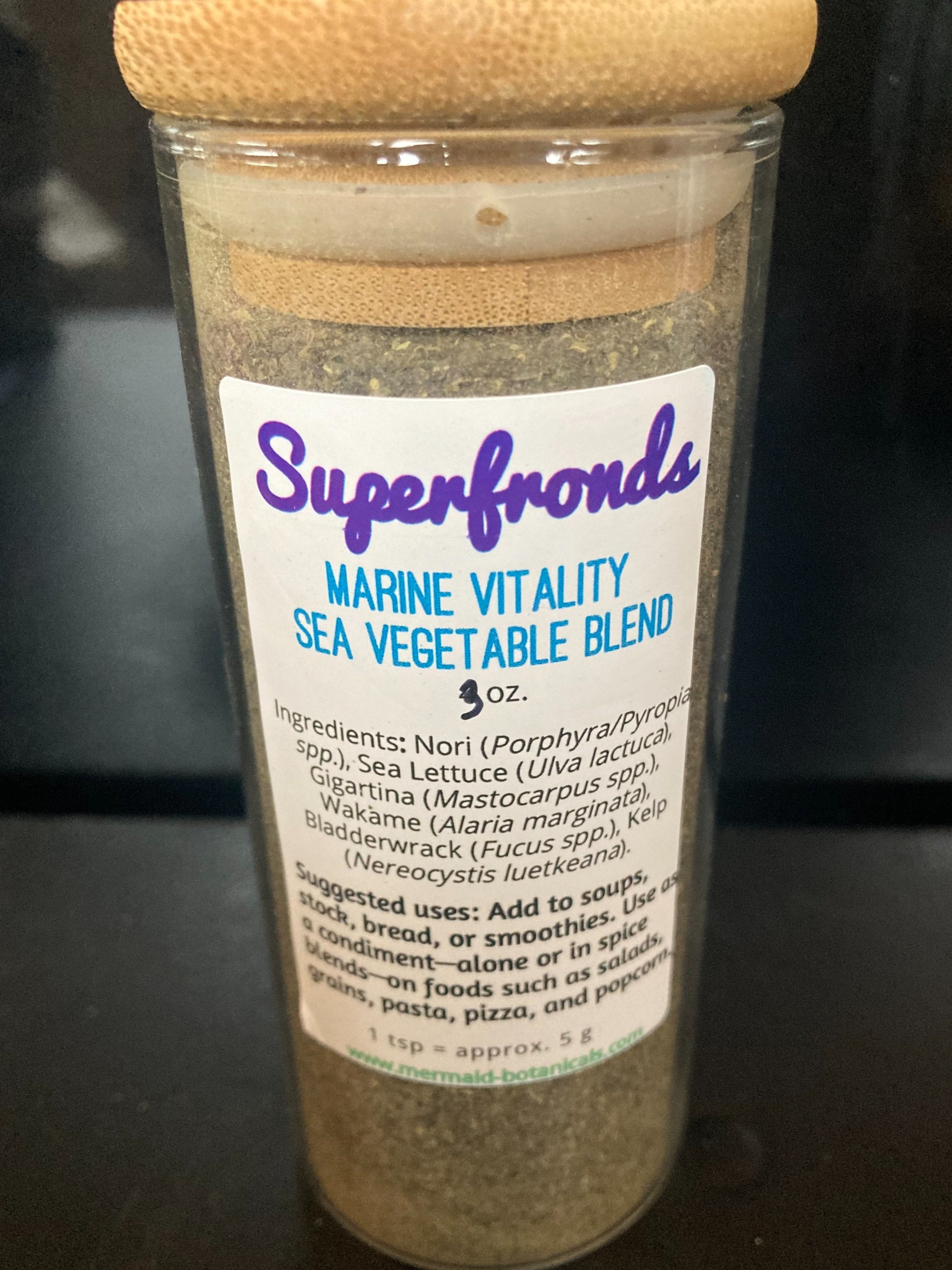
Superfronds Marine Vitality Sea Vegetable Blend (Dried Granules)
Ingredients: Nori (Porphyra/Pyropia spp.), Sea Lettuce (Ulva lactuca), Gigartina (Mastocarpus spp.), Wakame (Alaria marginata), Bladderwrack (Fucus spp.), Kelp (Nereocystis luetkeana).
Superfronds Marine Vitality Sea Vegetable Blend came into being as I am often teaching about the benefits of mixing and matching your seaweeds from the different classes—red, green, and brown—to harness the unique vitamin and mineral content and health supportive properties of each grouping, yet I didn’t have a blend that included green seaweeds among my offerings. I wanted to also create a mix comprised predominantly of low-iodine containing seaweeds1for an overall iodine content that is less than blends with higher-iodine containing seaweeds, for more frequent and versatile usage. Many of the seaweeds in this blend are also a good source of phosphorus and iron and contain selenium, zinc, and other vitamin and mineral co-factors that support thyroid health, as well as uncommonly available trace elements, such as manganese, copper, cobalt, and molybdenum.
And so, this mild-flavored, decidedly salty, power-packed mix was born…
Superfronds Marine Vitality Sea Vegetable Blend Features:
Nori (Porphyra/Pyropia spp.)
A mild red seaweed with relatively high protein content, Nori is also one of the lowest iodine-containing seaweeds.2 Nori species tested for nutrients generally feature high amounts of vitamins A, C, and K; B vitamins, particularly folate; calcium, magnesium, phosphorus, zinc, and potassium. Nori species also contain a host of minerals and trace elements in smaller amounts—iron, copper, and manganese—as well as antioxidant carotenoids. Nori has one of the highest Essential Fatty Acid content of all the seaweeds, and some Porphyra species tested tend to have a higher selenium content than other seaweeds.
Sea Lettuce (Ulva lactuca)
One of the few green seaweeds used in culinary applications, Sea Lettuce is also a relatively protein-rich seaweed with a low iodine content (compared to other seaweeds).3Ulva species tend to be good sources of sodium, potassium, iron (up to 78% RDA), magnesium, chromium, zinc, phosphorus, copper, and manganese (up to 49% RDA), as well as 50% of your daily dose of vitamins C and K. They also contain antioxidant carotenoids and chlorophyll. Mineral analysis has reveled some of the highest content of calcium, iron, magnesium, and manganese among seaweeds. Sea Lettuce contains the sulfated polysaccharide ulvan, which has been well studied for its medicinal properties.
*Note: Porphyra and Ulva species tested have been shown to have a range of iodine that can be anywhere from 25-400% of the 150µg/day standard RDA, per 5 gram serving—significantly lower than other seaweeds, but not necessarily compared to other foods.
Gigartina (Mastocarpus spp.)
Gigartina is another red seaweed valued for its high carrageenan content. Carrageenan is a sulfated polysaccharide, which has been studied for its substantial antiviral activity (ability to prevent viral cell attachment), immunomodulatory activity, and antioxidant capacity, among many other properties. Also generally containing a moderate amount of vitamins A, C, K, and B complex, Gigartina species tested have been shown to contain magnesium, calcium, potassium, and sodium, as well as some iron, phosphorus, zinc, and copper. It has a low to mid-range iodine content compared to other seaweeds, and it contains the antioxidant pigments phycocyanin and phycoerythrin.
Bullwhip Kelp (Nereocystis luetkeana)
Bullwhip Kelp is the most mineral-rich brown seaweed that I know of: super salty—highest in potassium salts—and around 40% total mineral content. Though containing significant iodine compared to other seaweeds, it has one of the lowest iodine contents of all the kelps. It also contains the highly antioxidant phenolic compounds phlorotannins (found in brown seaweeds) that have been shown to reduce oxidative cellular damage as well as neuroprotective and antiviral activity.
Wakame (Alaria marginata)
A relatively low iodine-containing brown seaweed, our local Wakame tends to have a good amount of fucoidan, a highly medicinal sulfated polysaccharide well-studied for its antiviral, neuroprotective, antioxidant, anticancer, and immunomodulatory properties, among others, as well as its profound ability to support the health and regeneration of various tissues of the body. It is a high-protein seaweed and contains many of the vitamins, minerals, and trace elements similar to the other seaweeds in this blend, particularly vitamins A and C. Alaria species have been shown to contain relatively high amounts of potassium, phosphorus, and selenium among seaweeds, and it also contains phlorotannins, like many other brown seaweeds.
Bladderwrack (Fucus spp.)
Bladderwrack is one of my go-to seaweeds for its high fucoidan content, a superlative constituent for enhancing tissue integrity. It is a mid-range iodine-containing brown seaweed, that also has significant phlorotannin content, as well as containing the gamut of vitamins, minerals and trace elements that other seaweeds contain, generally in mid-range amounts (compared to other seaweeds). Some Fucus species tested showed significant quantities of calcium and copper.
Iodine Note
Seaweeds can naturally contain significant levels of iodine. While cooking seaweeds can substantially reduce iodine content, individuals with thyroid conditions, iodine sensitivity or deficiency, or elders should integrate seaweeds into their diet gradually and thoughtfully. Professional guidance in these cases is recommended.
Seaweeds provided by Nature Spirit Herbs, BC Kelp, and/or Maine Coast Sea Vegetables.
Why Wild Seaweeds?
Our seaweeds are wild harvested from coastal environments where they naturally thrive—often in areas of strong current, wave action, and elemental exposure. Dynamic intertidal conditions—shifting tides, sunlight, wave energy, and environmental variability—influence the development of many compounds for which seaweeds are traditionally valued, creating phytochemical profiles that differ from farmed seaweeds grown in more controlled settings.
We partner with harvesters working in high-energy coastal environments where seaweeds are exposed to conditions that support robust growth, diverse bioactive compounds, and contribute to the overall health and diversity of seaweed communities. Our harvesters are committed to the long-term health of wild seaweed communities, using sustainable practices that support regeneration and resilience.
Ingredients: Nori (Porphyra/Pyropia spp.), Sea Lettuce (Ulva lactuca), Gigartina (Mastocarpus spp.), Wakame (Alaria marginata), Bladderwrack (Fucus spp.), Kelp (Nereocystis luetkeana).
Superfronds Marine Vitality Sea Vegetable Blend came into being as I am often teaching about the benefits of mixing and matching your seaweeds from the different classes—red, green, and brown—to harness the unique vitamin and mineral content and health supportive properties of each grouping, yet I didn’t have a blend that included green seaweeds among my offerings. I wanted to also create a mix comprised predominantly of low-iodine containing seaweeds1for an overall iodine content that is less than blends with higher-iodine containing seaweeds, for more frequent and versatile usage. Many of the seaweeds in this blend are also a good source of phosphorus and iron and contain selenium, zinc, and other vitamin and mineral co-factors that support thyroid health, as well as uncommonly available trace elements, such as manganese, copper, cobalt, and molybdenum.
And so, this mild-flavored, decidedly salty, power-packed mix was born…
Superfronds Marine Vitality Sea Vegetable Blend Features:
Nori (Porphyra/Pyropia spp.)
A mild red seaweed with relatively high protein content, Nori is also one of the lowest iodine-containing seaweeds.2 Nori species tested for nutrients generally feature high amounts of vitamins A, C, and K; B vitamins, particularly folate; calcium, magnesium, phosphorus, zinc, and potassium. Nori species also contain a host of minerals and trace elements in smaller amounts—iron, copper, and manganese—as well as antioxidant carotenoids. Nori has one of the highest Essential Fatty Acid content of all the seaweeds, and some Porphyra species tested tend to have a higher selenium content than other seaweeds.
Sea Lettuce (Ulva lactuca)
One of the few green seaweeds used in culinary applications, Sea Lettuce is also a relatively protein-rich seaweed with a low iodine content (compared to other seaweeds).3Ulva species tend to be good sources of sodium, potassium, iron (up to 78% RDA), magnesium, chromium, zinc, phosphorus, copper, and manganese (up to 49% RDA), as well as 50% of your daily dose of vitamins C and K. They also contain antioxidant carotenoids and chlorophyll. Mineral analysis has reveled some of the highest content of calcium, iron, magnesium, and manganese among seaweeds. Sea Lettuce contains the sulfated polysaccharide ulvan, which has been well studied for its medicinal properties.
*Note: Porphyra and Ulva species tested have been shown to have a range of iodine that can be anywhere from 25-400% of the 150µg/day standard RDA, per 5 gram serving—significantly lower than other seaweeds, but not necessarily compared to other foods.
Gigartina (Mastocarpus spp.)
Gigartina is another red seaweed valued for its high carrageenan content. Carrageenan is a sulfated polysaccharide, which has been studied for its substantial antiviral activity (ability to prevent viral cell attachment), immunomodulatory activity, and antioxidant capacity, among many other properties. Also generally containing a moderate amount of vitamins A, C, K, and B complex, Gigartina species tested have been shown to contain magnesium, calcium, potassium, and sodium, as well as some iron, phosphorus, zinc, and copper. It has a low to mid-range iodine content compared to other seaweeds, and it contains the antioxidant pigments phycocyanin and phycoerythrin.
Bullwhip Kelp (Nereocystis luetkeana)
Bullwhip Kelp is the most mineral-rich brown seaweed that I know of: super salty—highest in potassium salts—and around 40% total mineral content. Though containing significant iodine compared to other seaweeds, it has one of the lowest iodine contents of all the kelps. It also contains the highly antioxidant phenolic compounds phlorotannins (found in brown seaweeds) that have been shown to reduce oxidative cellular damage as well as neuroprotective and antiviral activity.
Wakame (Alaria marginata)
A relatively low iodine-containing brown seaweed, our local Wakame tends to have a good amount of fucoidan, a highly medicinal sulfated polysaccharide well-studied for its antiviral, neuroprotective, antioxidant, anticancer, and immunomodulatory properties, among others, as well as its profound ability to support the health and regeneration of various tissues of the body. It is a high-protein seaweed and contains many of the vitamins, minerals, and trace elements similar to the other seaweeds in this blend, particularly vitamins A and C. Alaria species have been shown to contain relatively high amounts of potassium, phosphorus, and selenium among seaweeds, and it also contains phlorotannins, like many other brown seaweeds.
Bladderwrack (Fucus spp.)
Bladderwrack is one of my go-to seaweeds for its high fucoidan content, a superlative constituent for enhancing tissue integrity. It is a mid-range iodine-containing brown seaweed, that also has significant phlorotannin content, as well as containing the gamut of vitamins, minerals and trace elements that other seaweeds contain, generally in mid-range amounts (compared to other seaweeds). Some Fucus species tested showed significant quantities of calcium and copper.
Iodine Note
Seaweeds can naturally contain significant levels of iodine. While cooking seaweeds can substantially reduce iodine content, individuals with thyroid conditions, iodine sensitivity or deficiency, or elders should integrate seaweeds into their diet gradually and thoughtfully. Professional guidance in these cases is recommended.
Seaweeds provided by Nature Spirit Herbs, BC Kelp, and/or Maine Coast Sea Vegetables.
Why Wild Seaweeds?
Our seaweeds are wild harvested from coastal environments where they naturally thrive—often in areas of strong current, wave action, and elemental exposure. Dynamic intertidal conditions—shifting tides, sunlight, wave energy, and environmental variability—influence the development of many compounds for which seaweeds are traditionally valued, creating phytochemical profiles that differ from farmed seaweeds grown in more controlled settings.
We partner with harvesters working in high-energy coastal environments where seaweeds are exposed to conditions that support robust growth, diverse bioactive compounds, and contribute to the overall health and diversity of seaweed communities. Our harvesters are committed to the long-term health of wild seaweed communities, using sustainable practices that support regeneration and resilience.